Ecospark
Your personal sustainability companion
View DeliverablesProject Summary
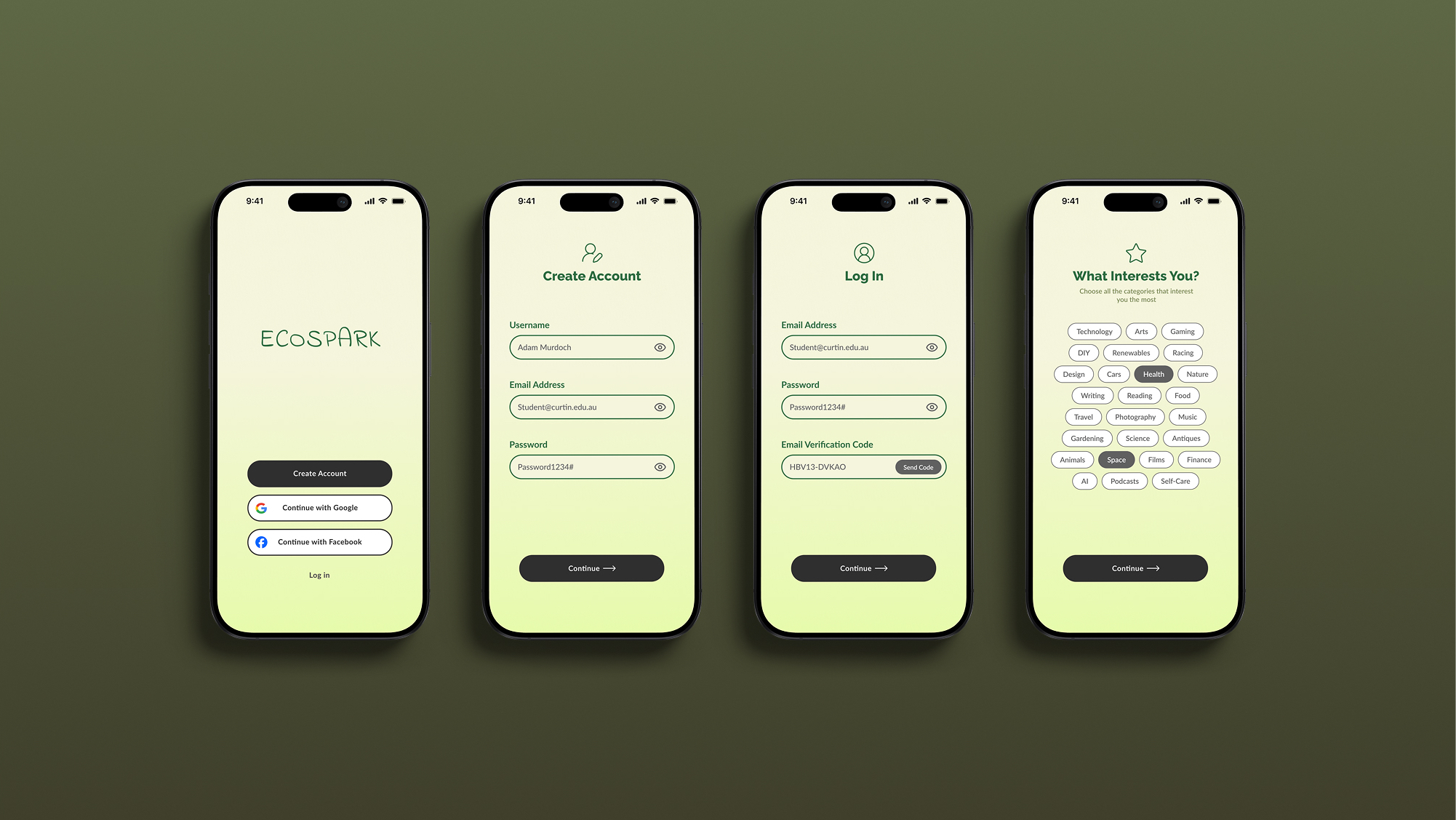
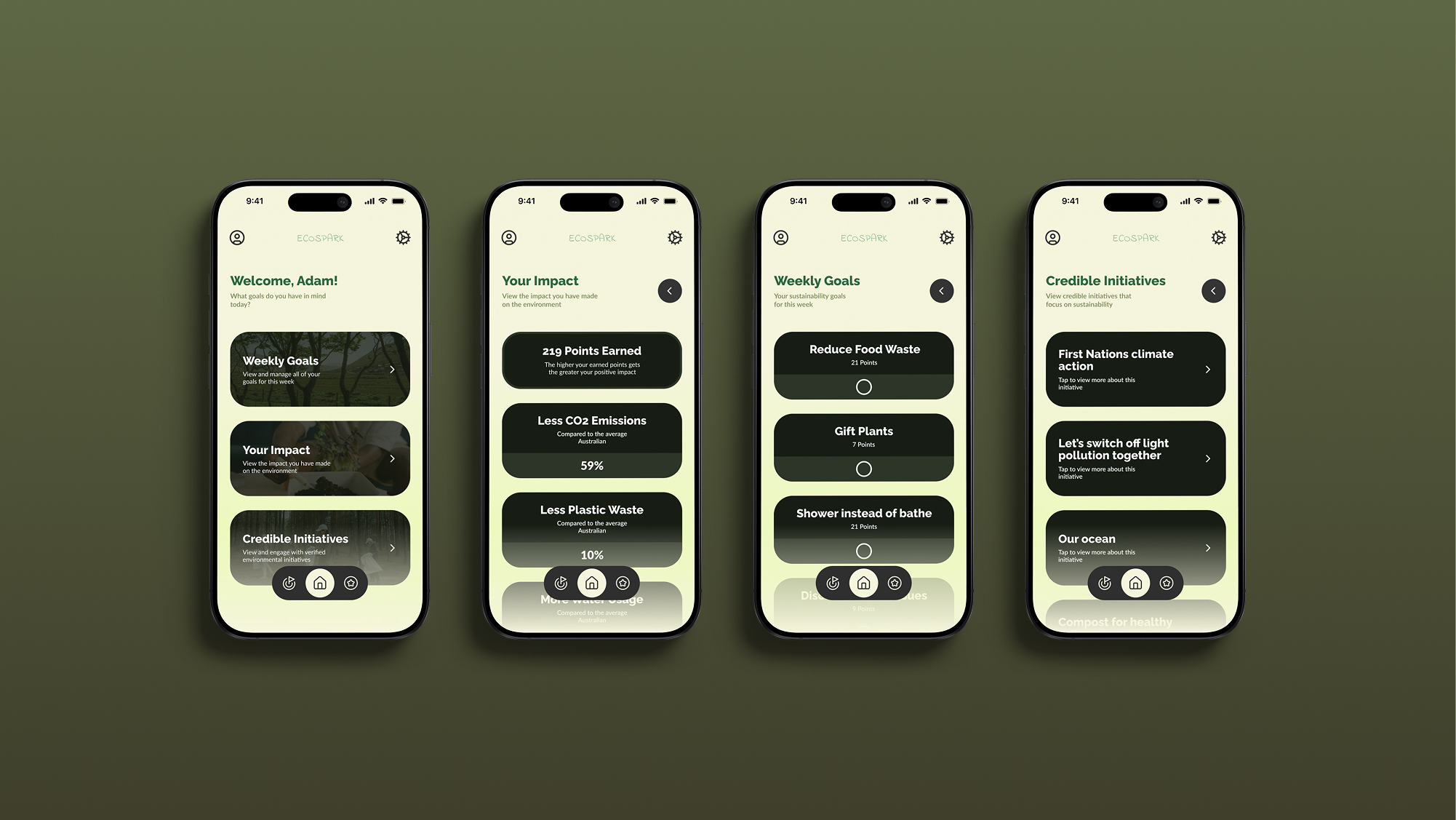
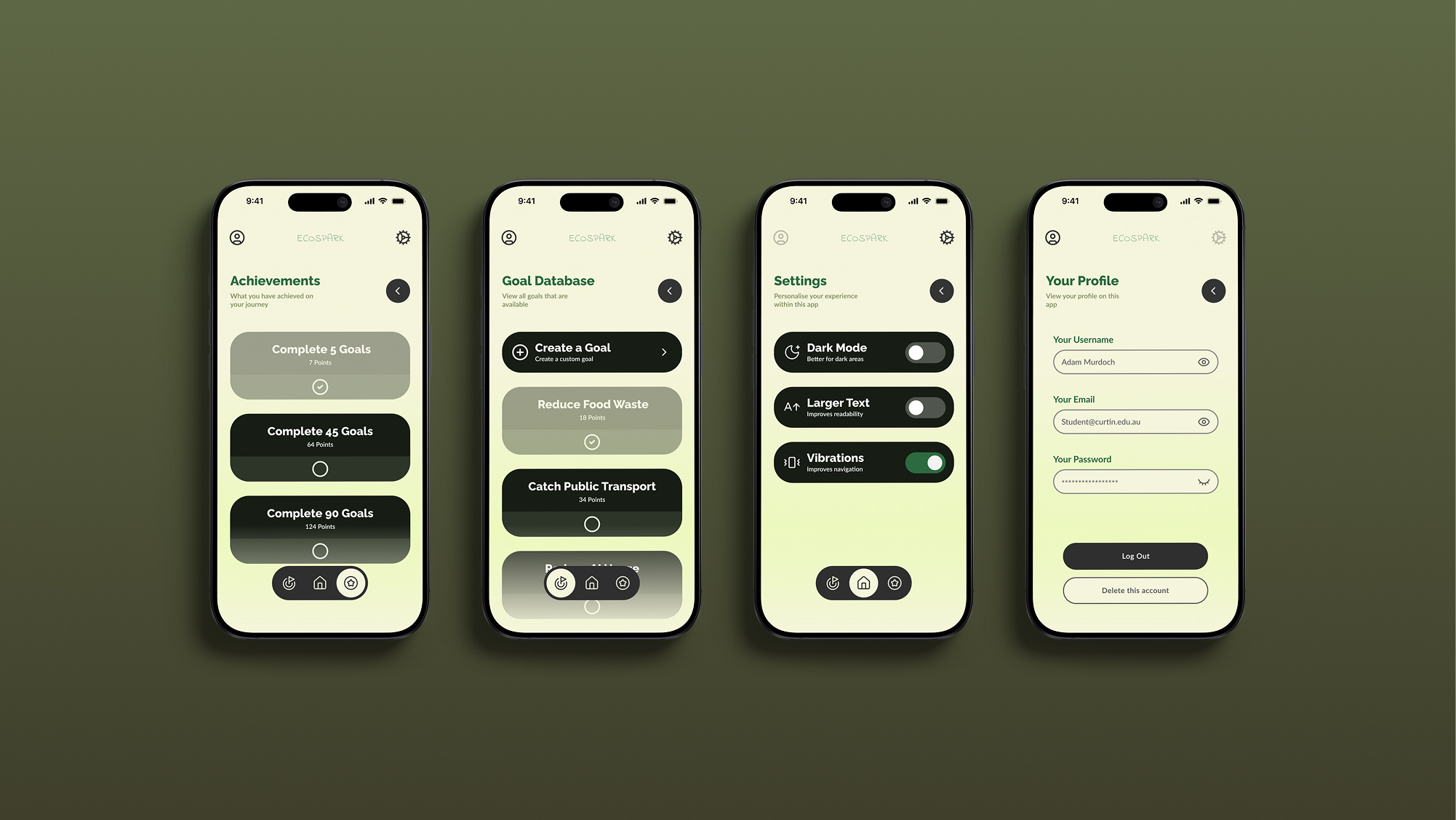
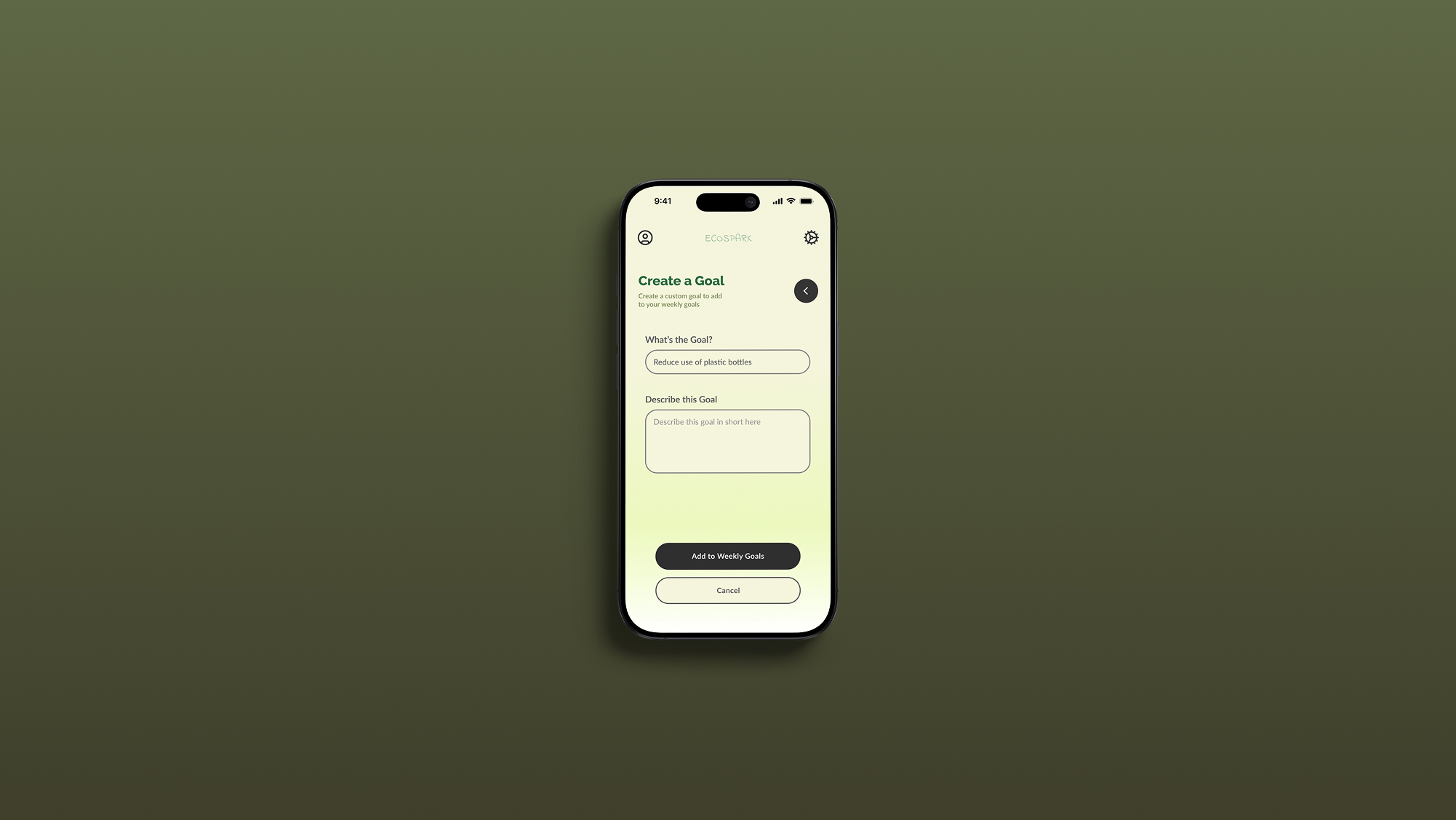
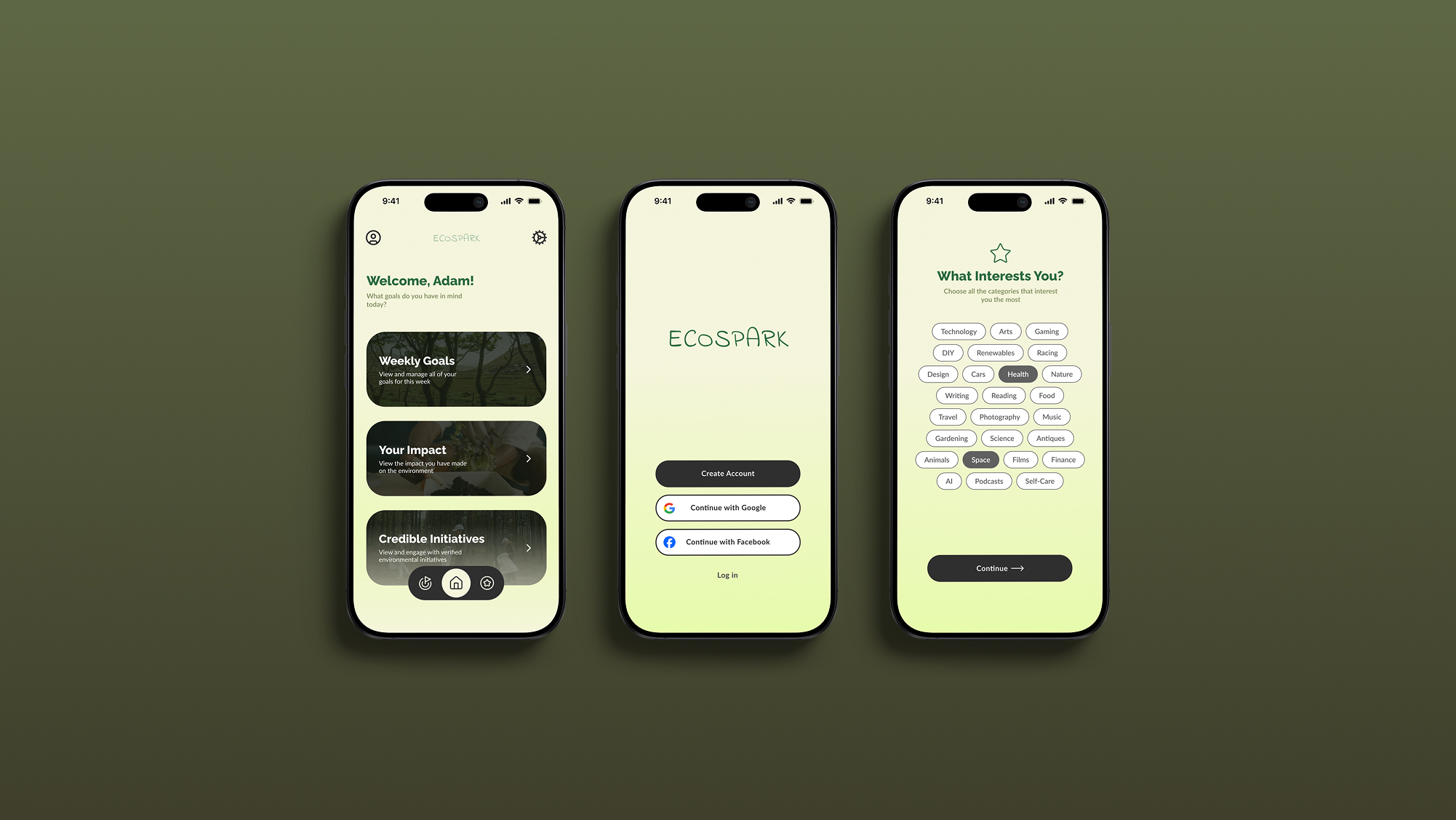
EcoSpark is a 12-week solo product-design concept exploring how sustainability-minded adults can turn the intent of sustainable living into reality using achievable weekly actions to better understand the environmental impact they can make. Research with 10 survey respondents revealed concerns about personal impact and corporate environmental claims, which shaped the goal-setting, progress and initiative-discovery features. The result is a polished high-fidelity prototype that has been designed using the research findings and ideation from the design process.
Project Information
Tools Used:
Figma, Notion, and Google Forms
Team Size:
Individual
Design Timeframe:
3 Months
Project Type:
Conceptual Project
.01 Research
Relevant UX Research
Competitor Analysis
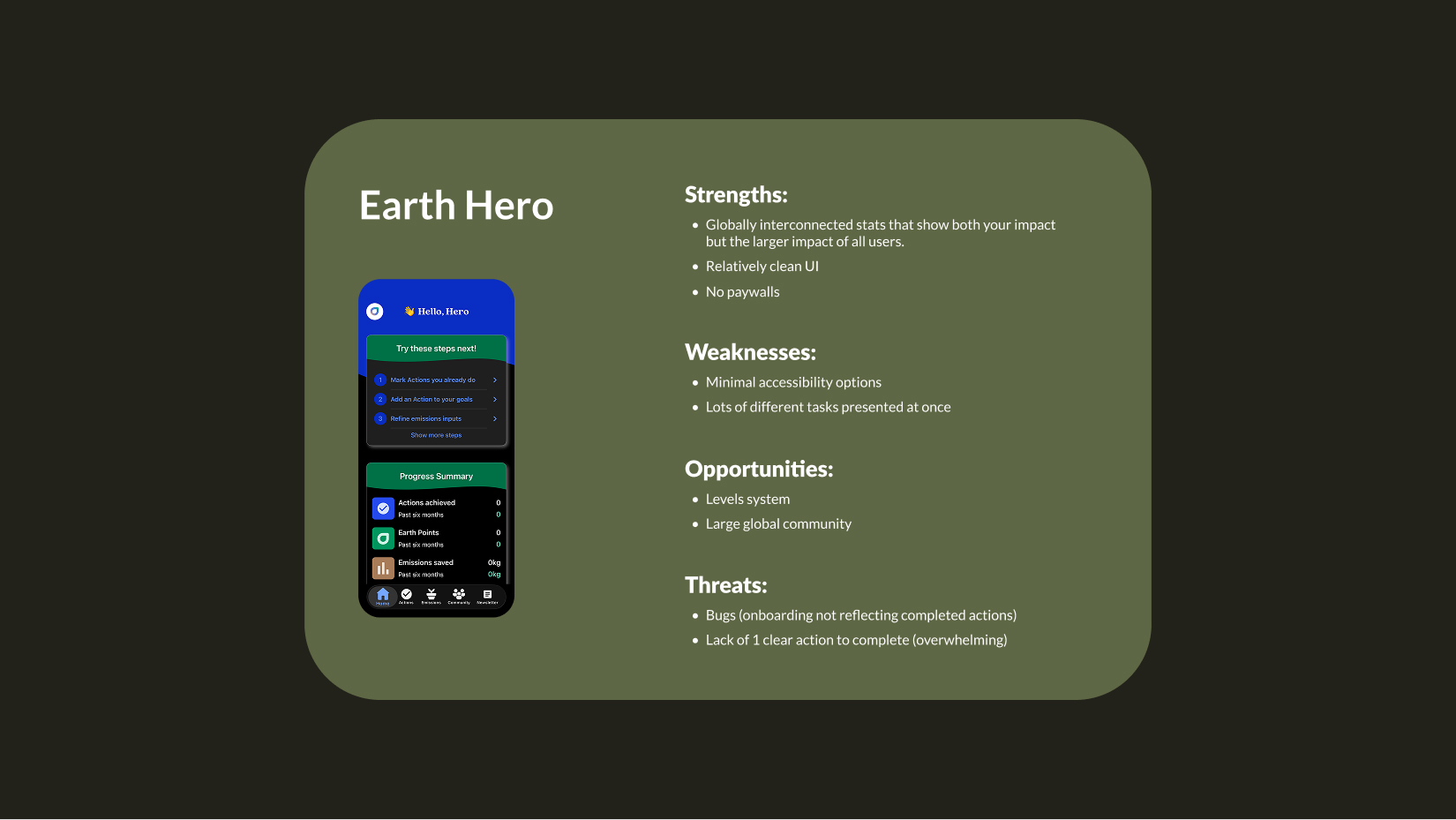
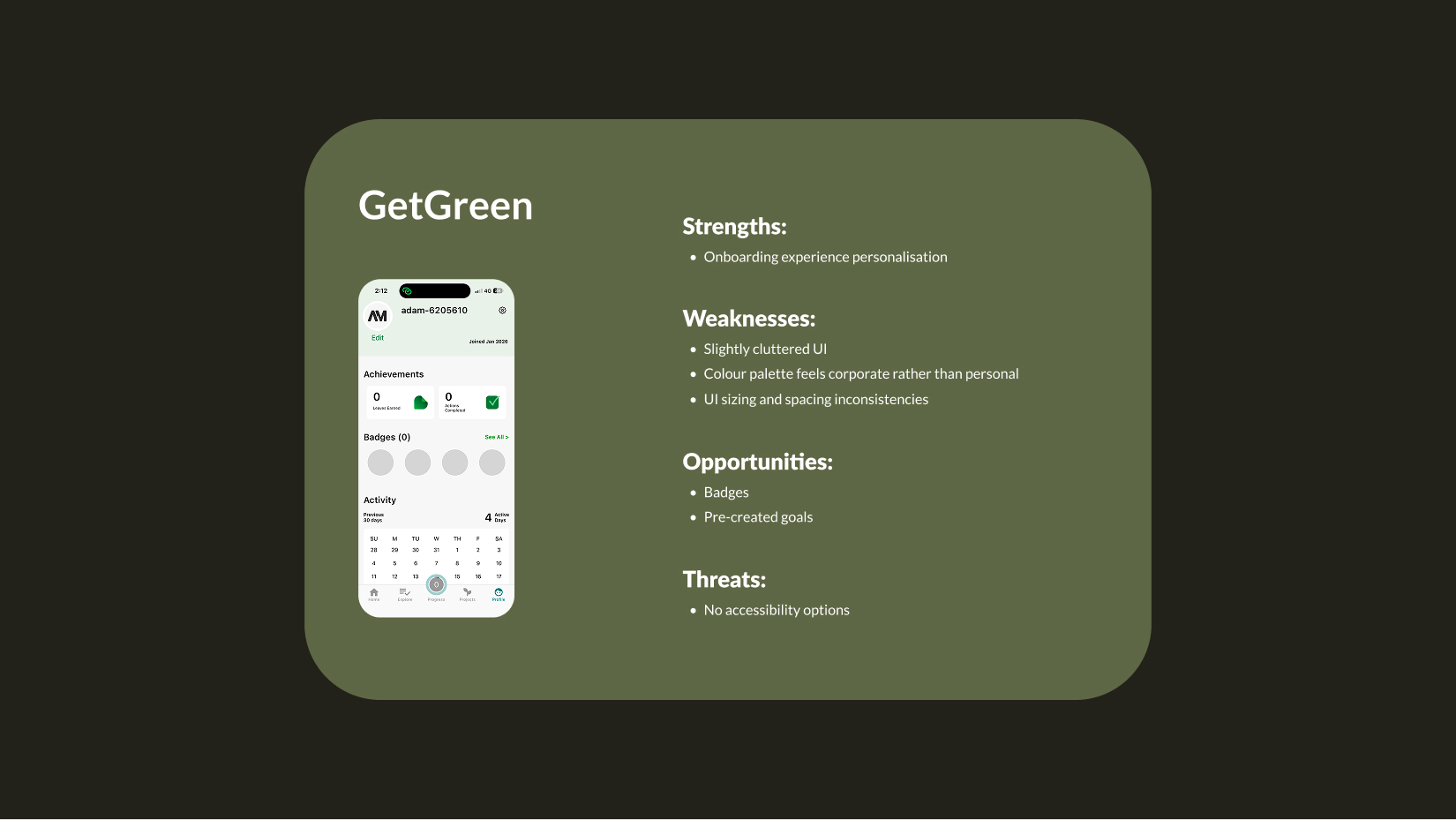
To initiate the research I decided to first identify and analyse competitors to better direct the creation of research later in the design process.
SWOT Analysis Takeaway
While there are mobile apps which promote sustainable living, many sustainability apps lack both accessibility options and engaging features such as gamification. This shortfall should be a specific focus of Ecospark to enhance the competitive advantage of the app.
Quick Findings
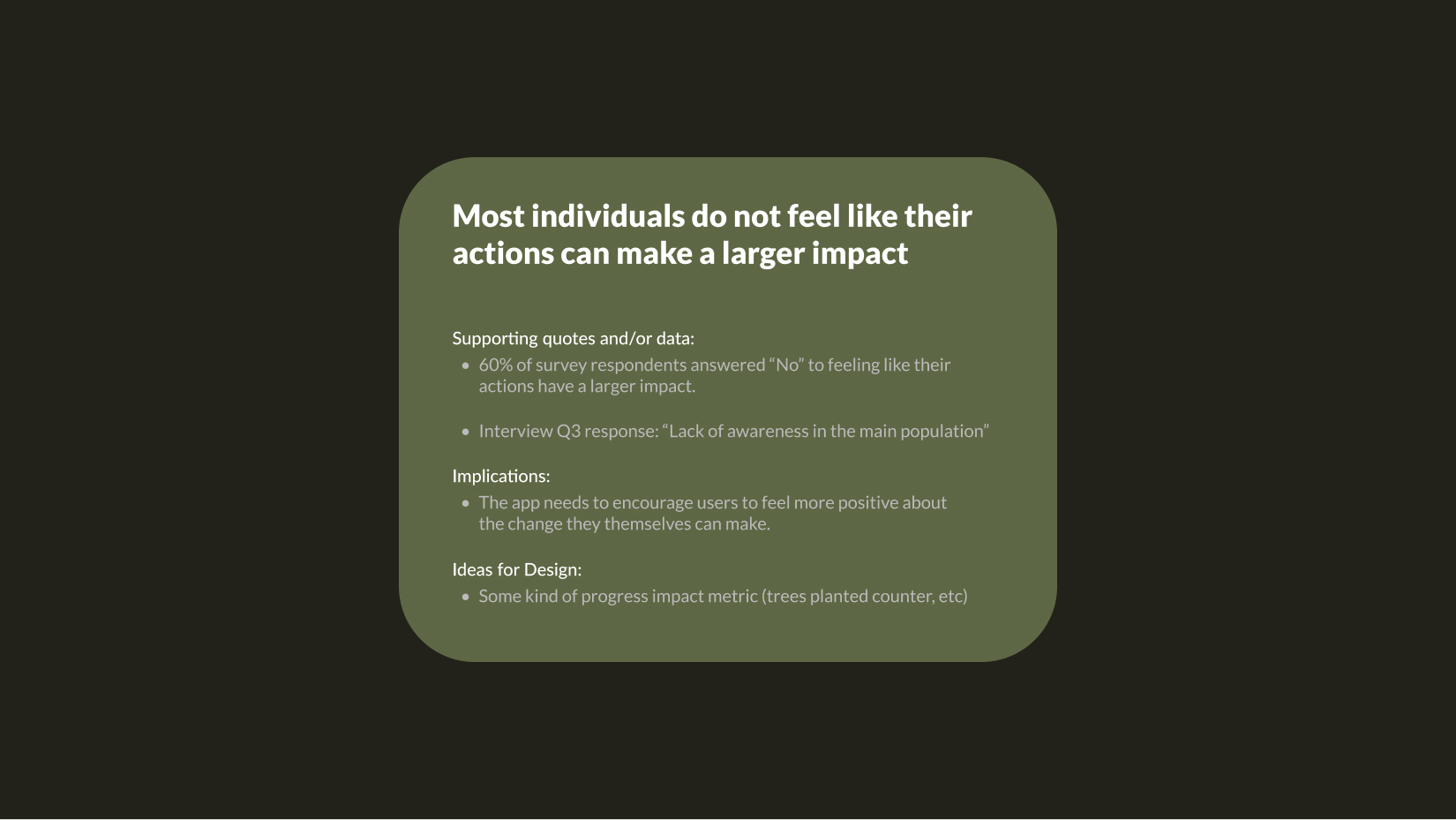
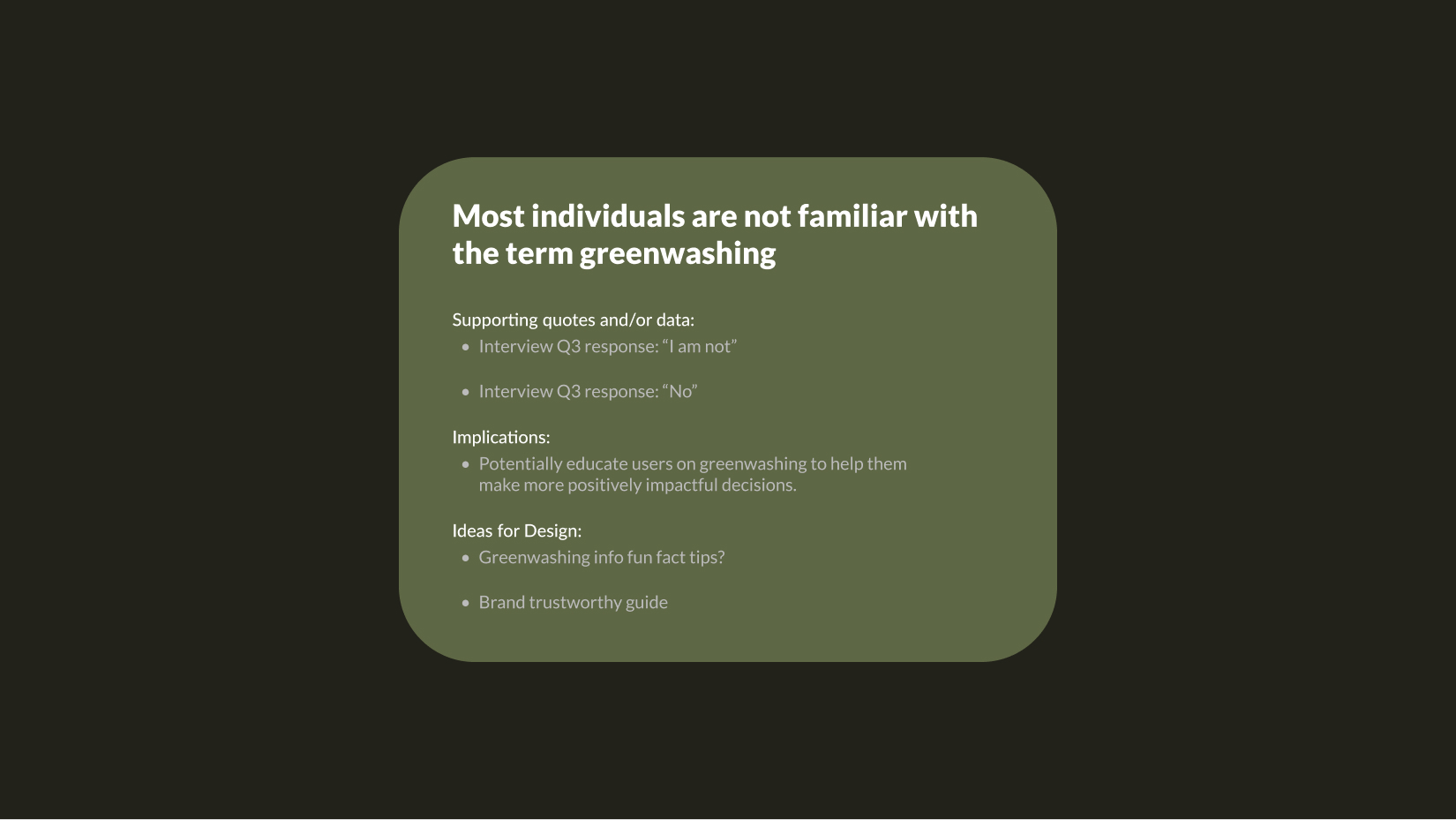
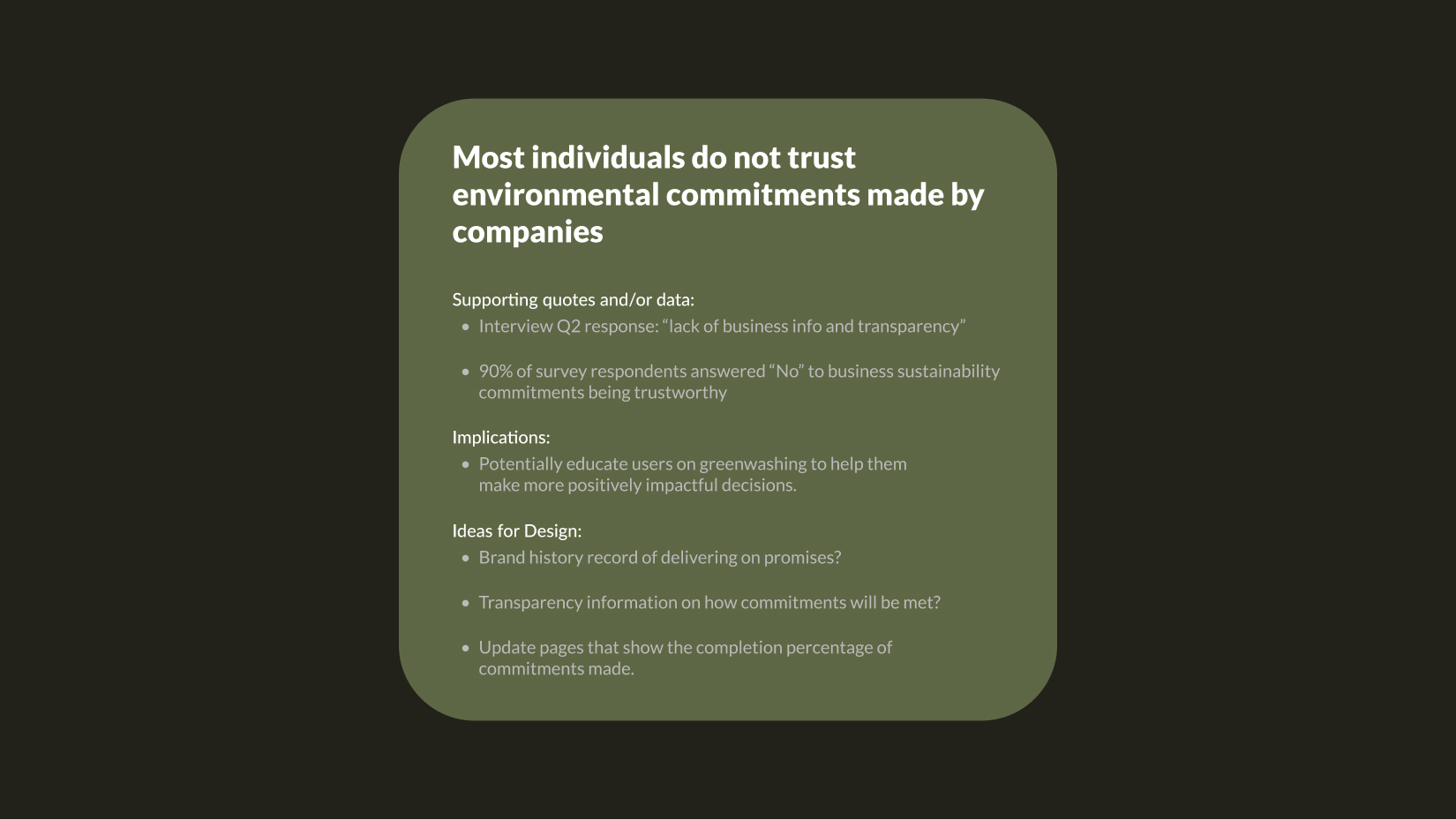
As the next step in understanding the target audience, I conducted a survey with a total of 10 participants.
User Goals
Based on the SWOT analysis and quick findings that were curated by the surveys I identified 3 separate goals that users of the app have when engaging with it.
1.
Increase sustainability of personal lifestyle.
2.
Make a larger positive impact in environmental health.
3.
Track personal environmental impact.
User Persona
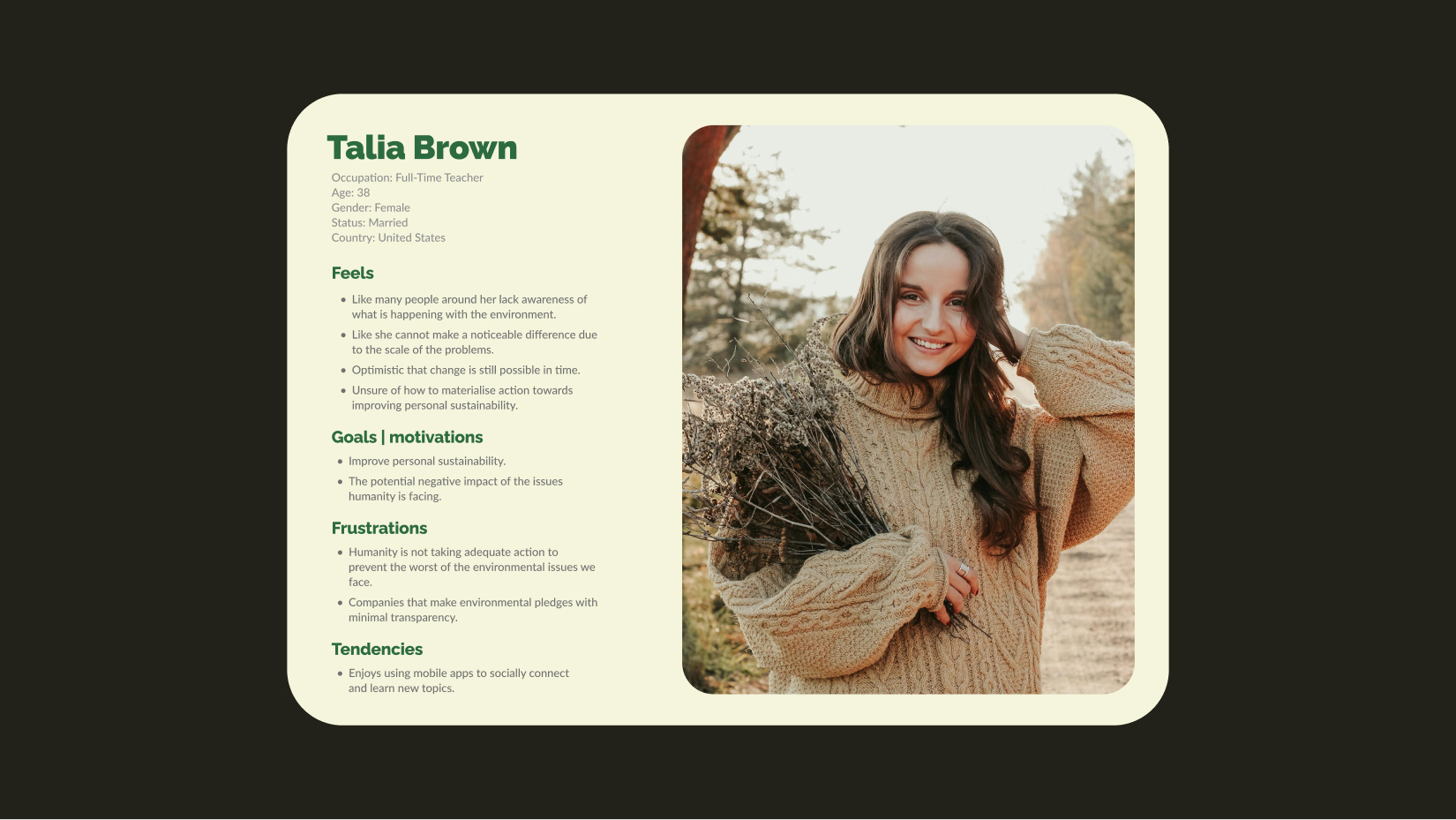
Using all research findings and identified goals, I created a user persona to help turn the prior data into a depiction of the target audience that can be empathised with, enhancing the capacity for effective emotional design. This ensures that design decisions are done with the utmost consideration of the user.
User Journey Map
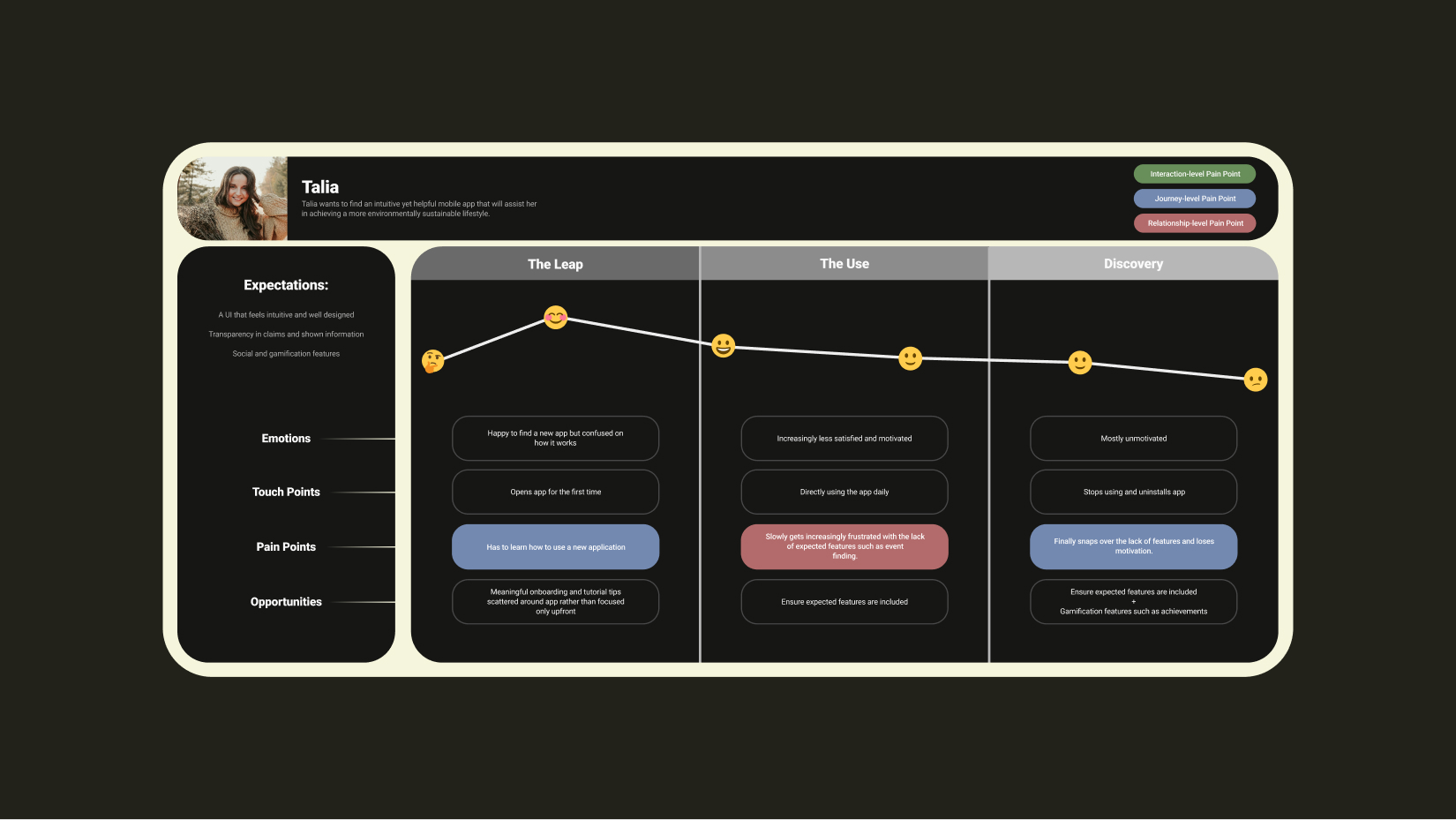
Using the created user persona, I create a journey map to identify pain points that are being experienced by the target audience. Within the journey map, I identified touch points, pain points, expectations, and opportunities that a target user may go through before discovering Ecospark. Going forward in the design process, the app must eliminate or reduce the identified pain points as much as possible to enhance the value provided to users in their journey of completing the identified user goals.
Information Architecture
Once features that supported each user goal were ideated, I designed the user flows and sitemap to map out the distribution of information that future wireframes will utilise to dictate the screens that need designing.
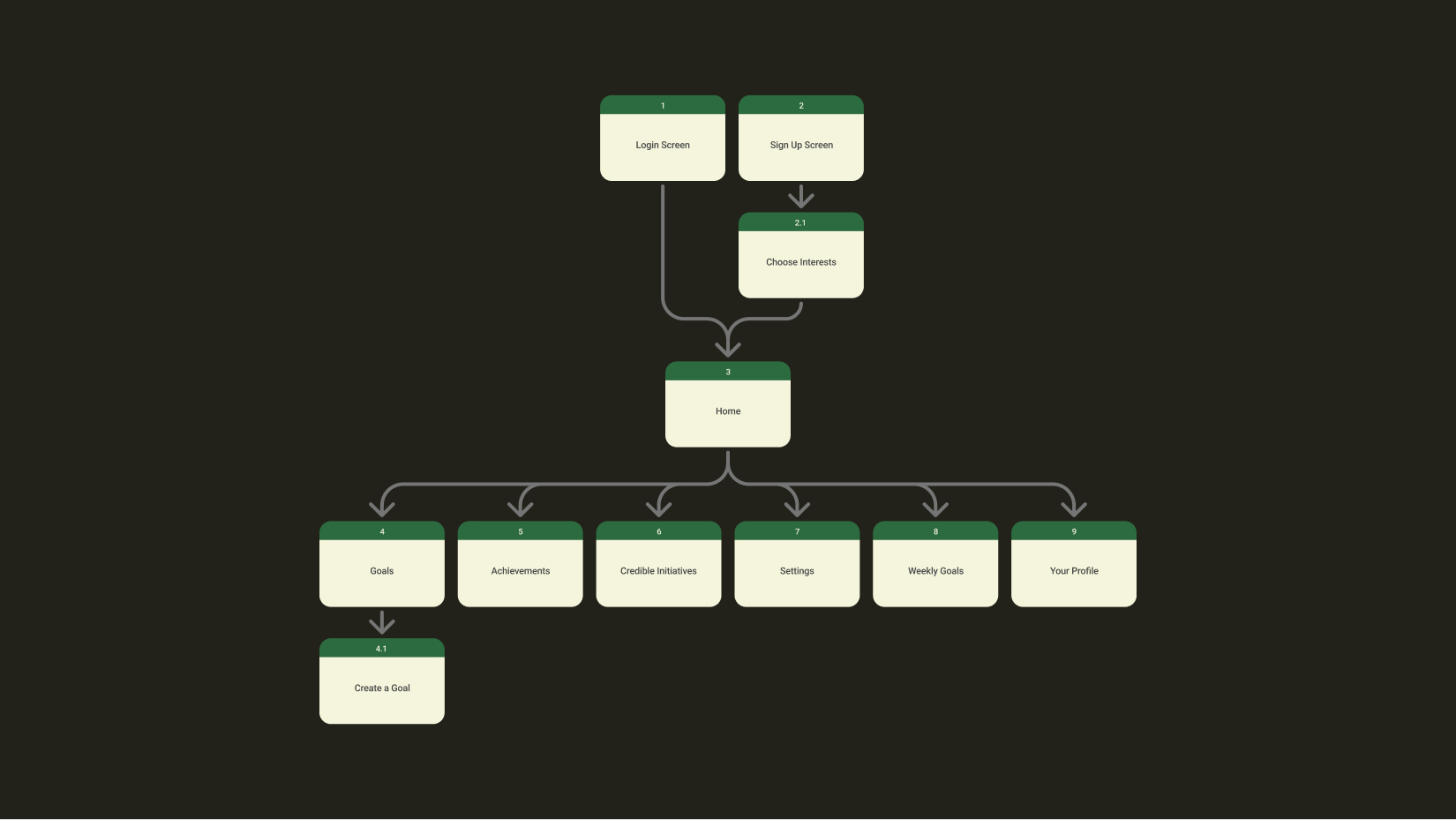
.02 Early Designs
Design Wireframes
Low-Fidelity Wireframe
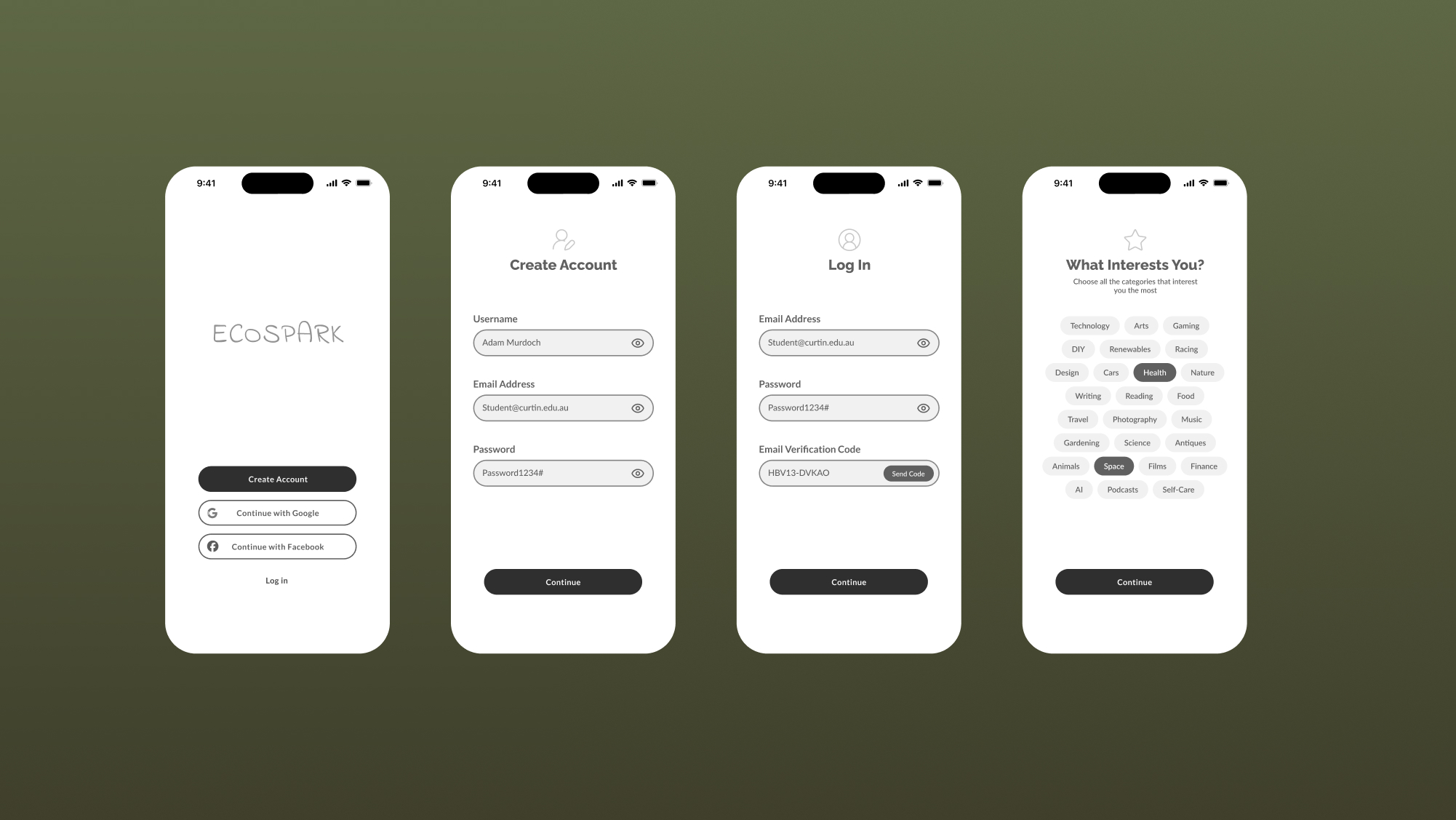
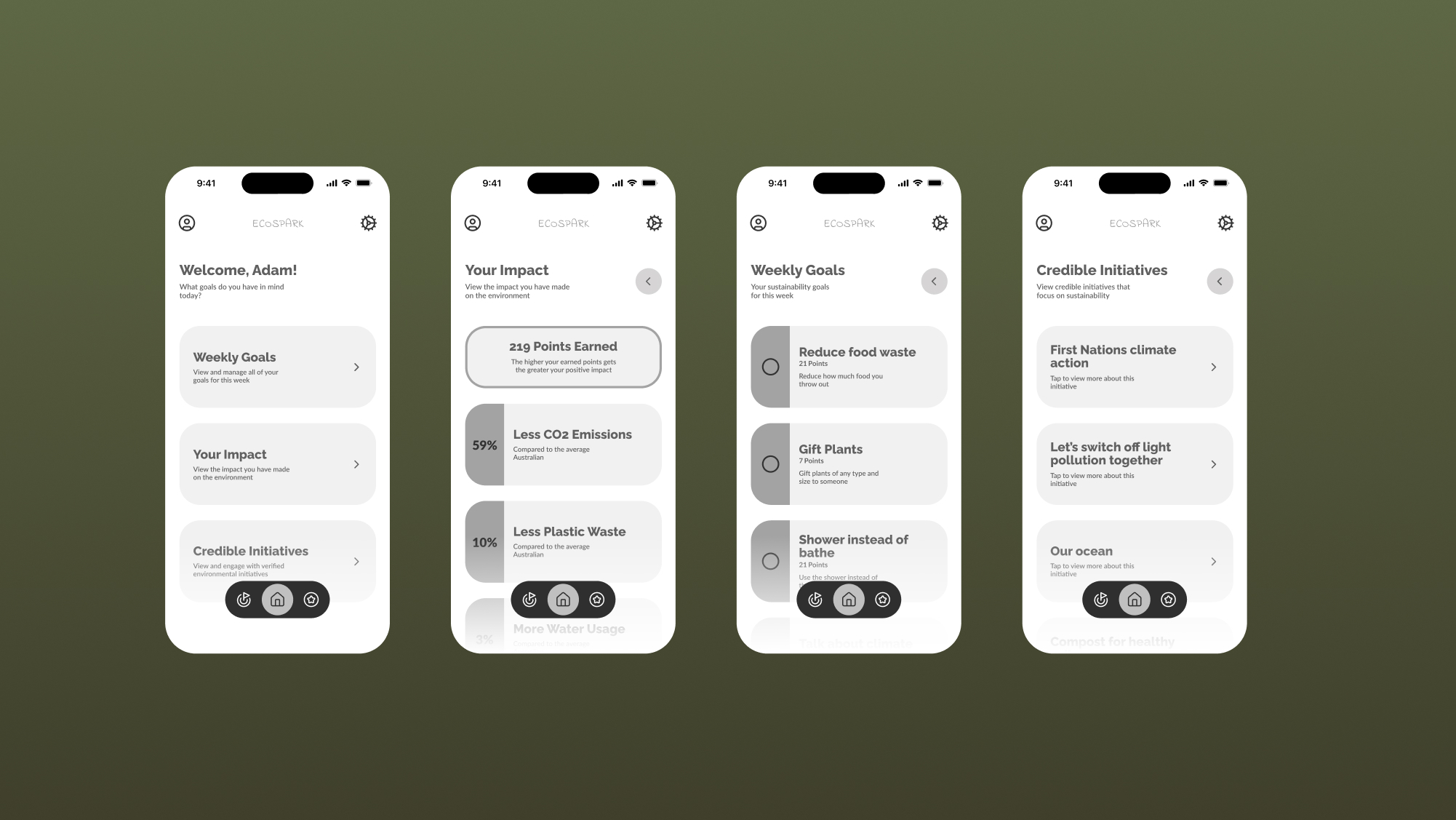
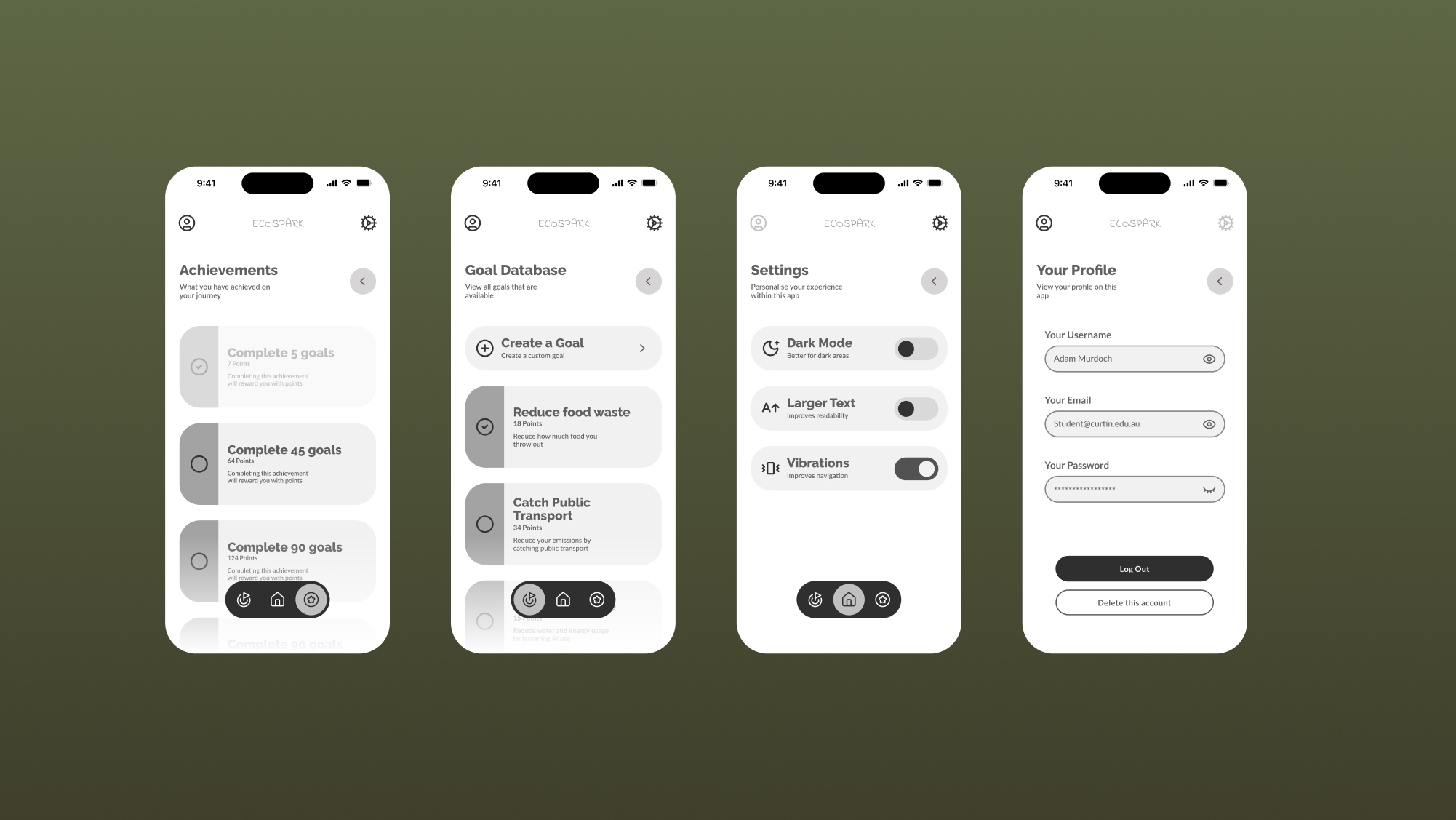
Upon completing all ideation and research, I created low-fidelity wireframes to experiment with a possible layout with consideration of the planned information architecture.
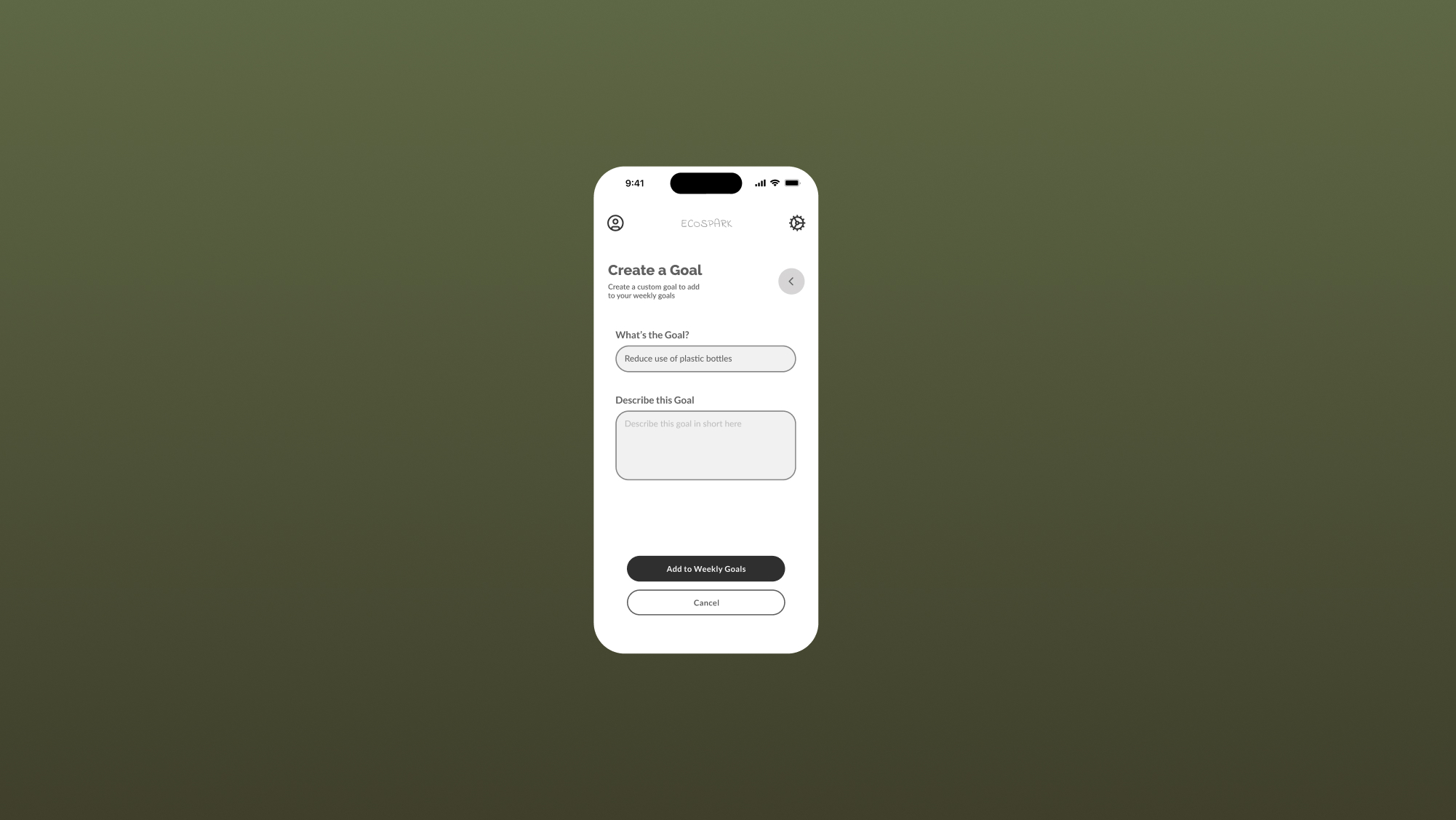
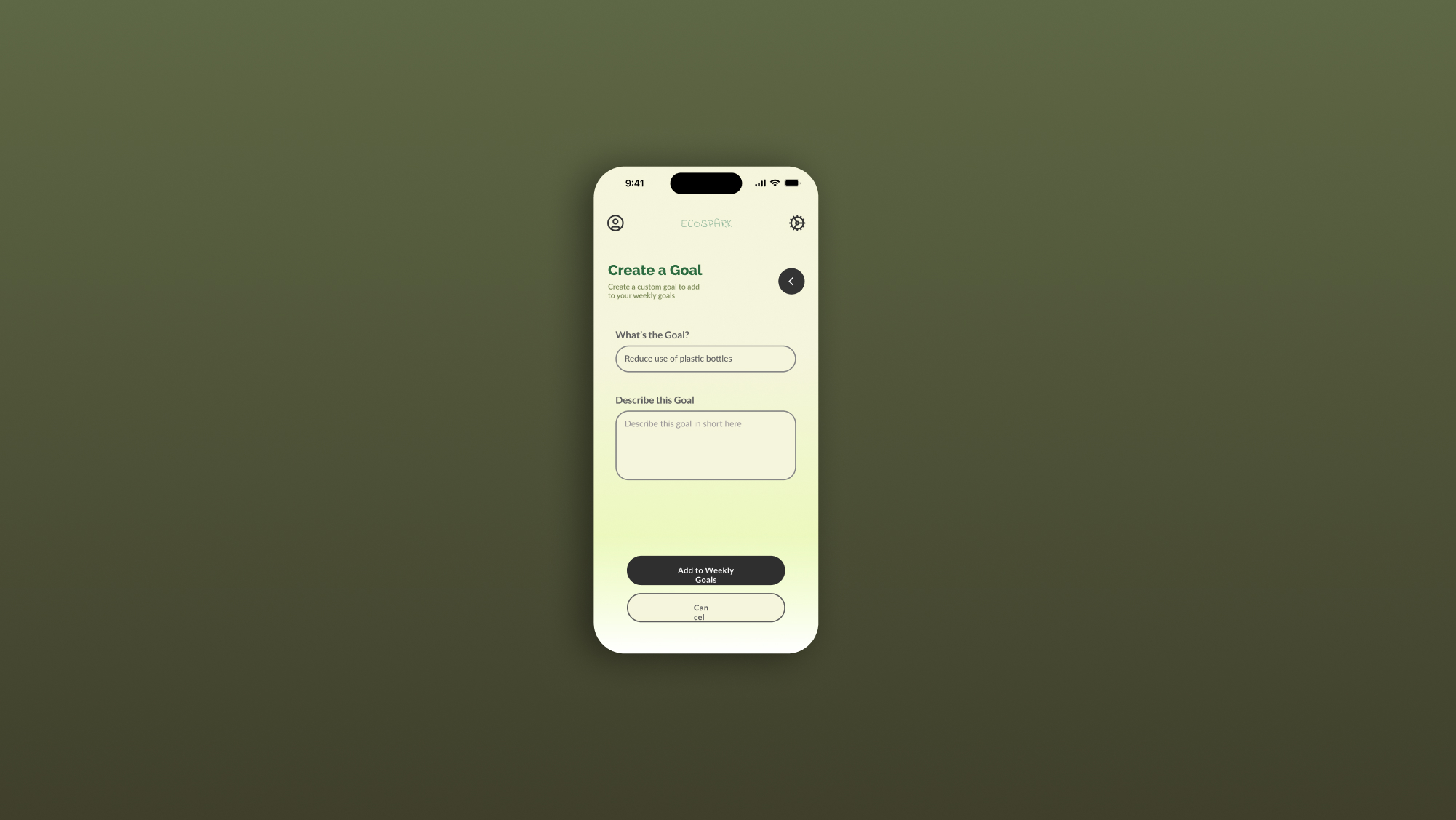
High-Fidelity Wireframes
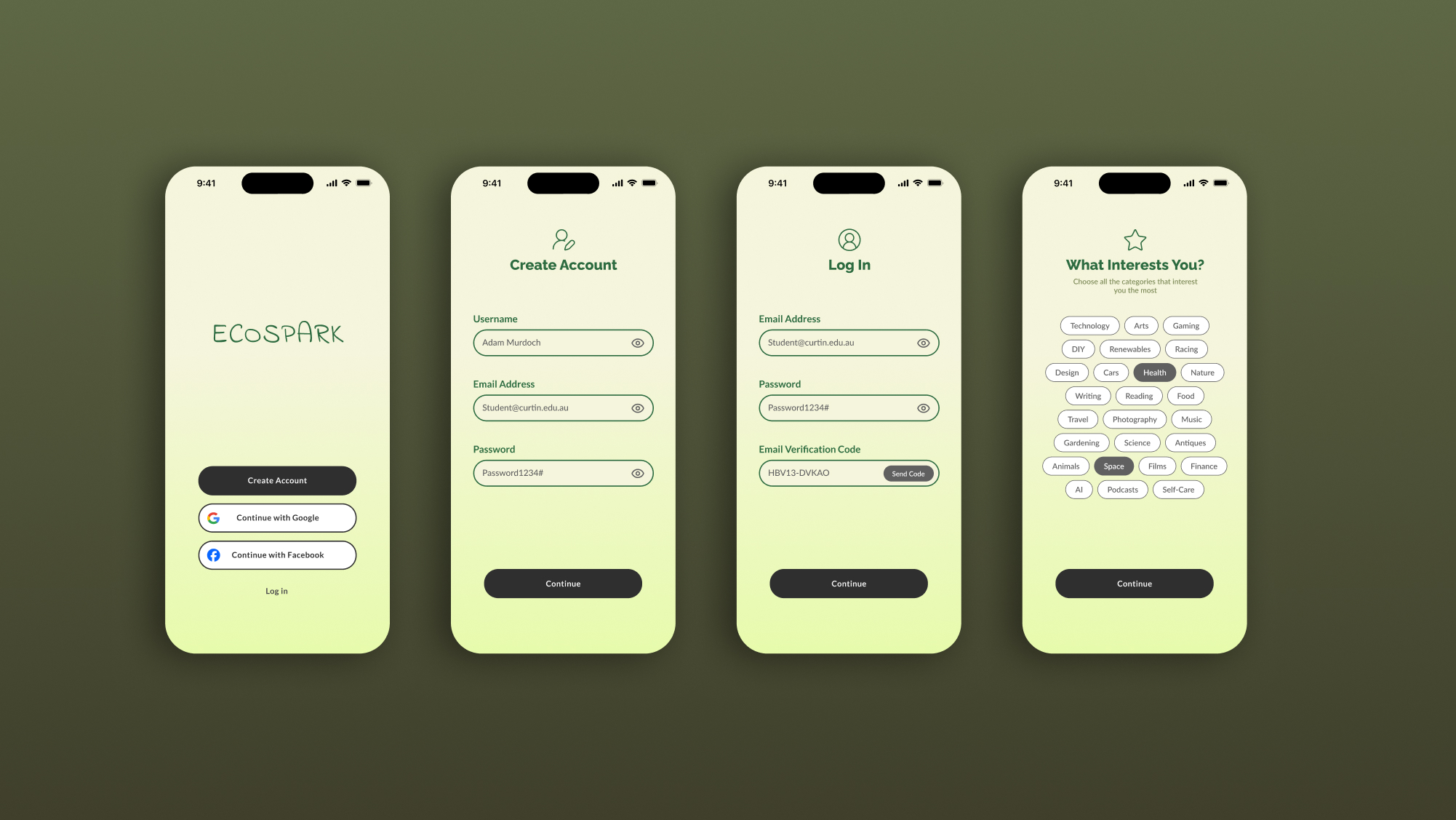
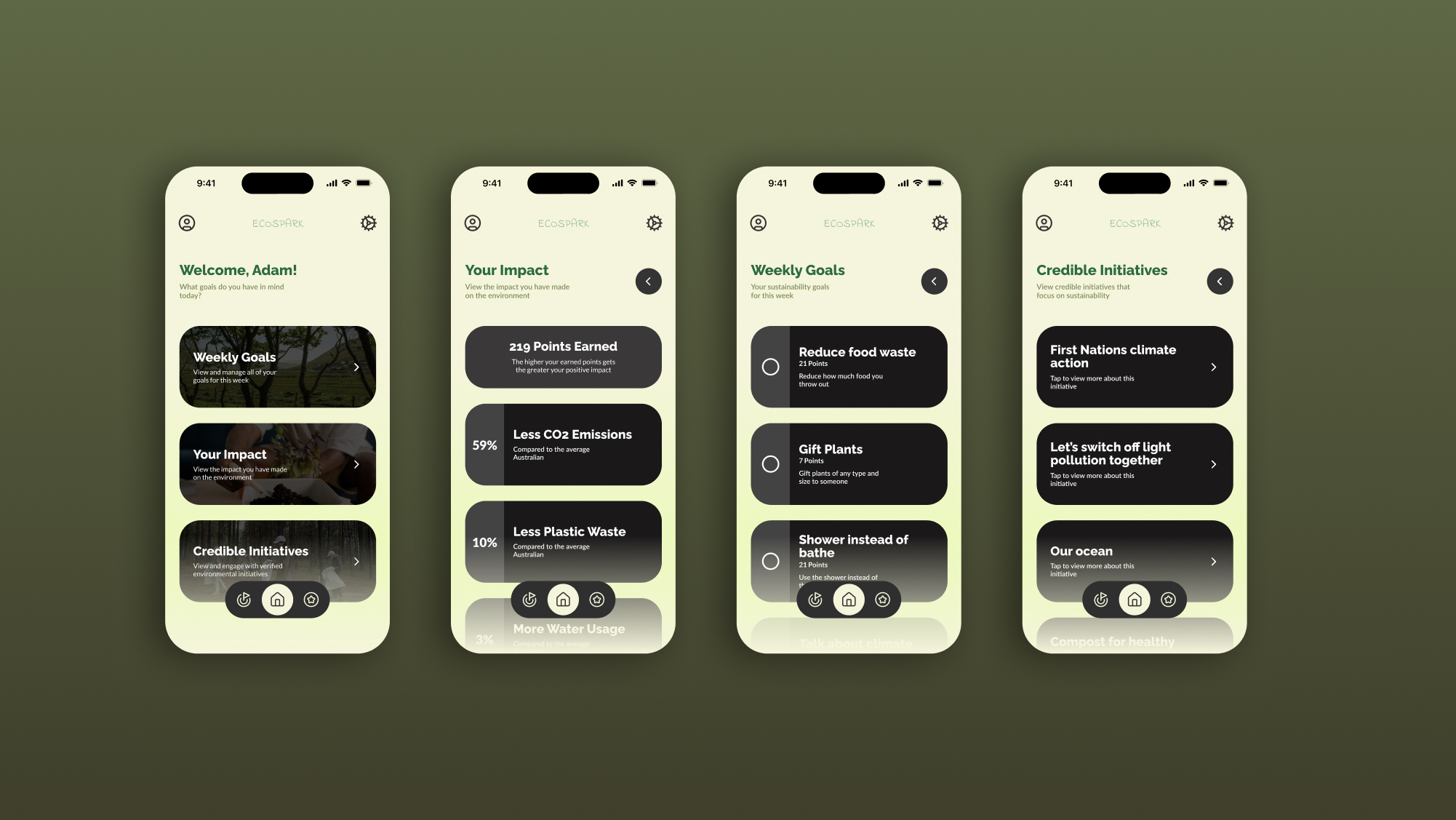
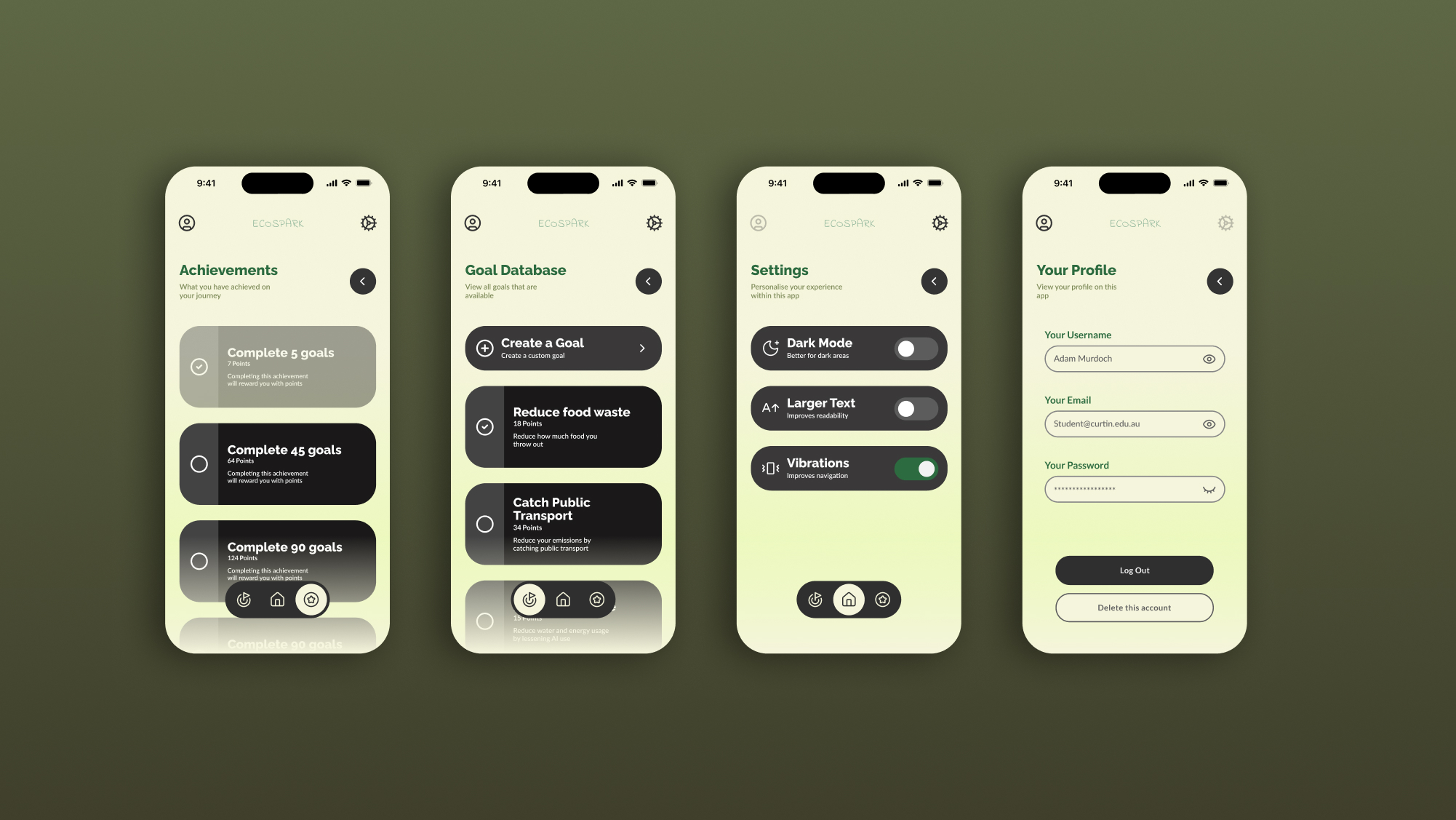
Based on the low-fidelity wireframes I designed a set of high-fidelity wireframes which experimented with the colour palette that was chosen by the fictional client within the brief.
.03 Deliverables
Final Design